
Best Niches for an AI Automation Agency in 2026
The best niches for an AI automation agency in 2026 are phone-heavy, rules-heavy local and B2B businesses. Here are 8, framed by the pain you'd automate.

The best niches for an AI automation agency in 2026 are businesses that live on the phone, run on repeatable rules and lose money every time a reply is slow: home services, dental and medical offices, med spas, law firm intake, property management, real estate teams, local fitness studios and B2B service firms. They share the same pattern. Lots of inbound requests, a small team, tools with APIs and a clear cost when something falls through the cracks. This guide explains how to judge a niche, then breaks down eight of them by the specific automation pain you’d solve.
We’re an AI automation agency ourselves, based in Boca Raton, and we work with local service businesses, B2B operators, founders and agencies. So this is written from the build side, not from a course-seller’s slide deck.
How to judge a niche before you pick one
Every “best niche” list skips the part that matters: the test. Score any niche on five questions.
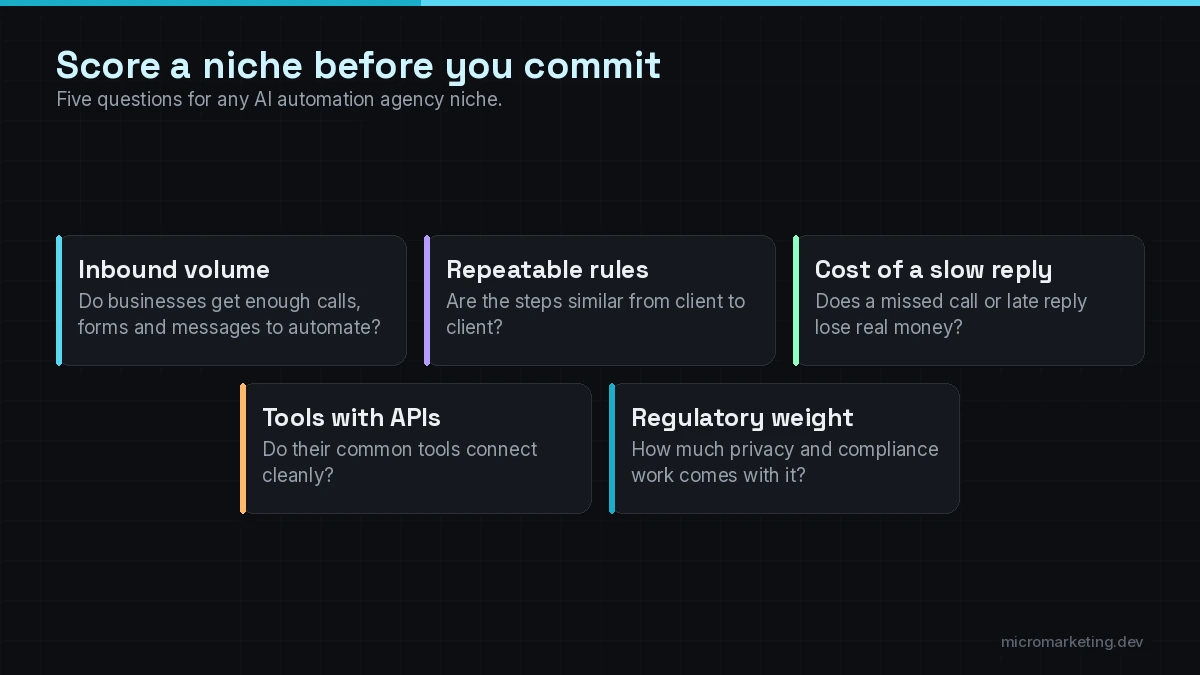
- Inbound volume. Do these businesses get a steady stream of calls, forms and messages? Volume is what makes automation pay.
- Repeatable rules. Can you write their intake, booking and follow-up steps on a page? Rules make builds reliable.
- Cost of a slow reply. When a lead waits, do they call a competitor? If yes, speed is the selling point.
- Tools with APIs. Do they use scheduling, CRM, practice-management or accounting tools you can connect to? Paper-heavy niches are slow to automate.
- Regulatory weight. Healthcare, legal and finance can be great niches, but they add compliance work. Price that in, don’t ignore it.
A niche that scores high on the first four and medium on the fifth is usually a good bet. Now the list.
1. Home services (HVAC, plumbing, electrical, roofing, cleaning)
The pain: calls come in while technicians are on jobs, emergency calls arrive after hours, quotes go out and never get followed up, and dispatch is a whiteboard. What you’d automate: an AI receptionist that answers, qualifies (emergency or routine, address, job type) and books; automatic job creation in the field-service tool; quote follow-up sequences; review requests after completed jobs. Why it works: high inbound volume, clear rules and an obvious cost of a missed call. Watch for: owners who want a fully hands-off setup. Build clear escalation for true emergencies.
2. Dental offices
The pain: front desks juggle the phone, check-ins and insurance questions at the same time; reschedules and no-shows eat hours. What you’d automate: call answering and booking, reminders and confirmations, recall campaigns, and insurance-question FAQs from approved content. Why it works: appointment-driven, repeatable and phone-heavy. Watch for: patient information. Anything that touches protected health information brings HIPAA obligations; the HHS HIPAA for Professionals pages are the starting point, and your vendors need to fit the practice’s compliance setup.
3. Medical and wellness practices, including med spas
The pain: high-intent leads from ads and social, long consult cycles, and lots of “how much does it cost?” questions. What you’d automate: speed-to-lead replies across web chat, SMS and phone; consult booking; pre-visit forms; follow-up sequences after consults. Why it works: leads are valuable and time-sensitive. Watch for: the same health-data rules as dental, plus careful wording on anything that sounds like medical advice. Keep the assistant to logistics and approved information.
4. Law firm intake
The pain: potential clients call several firms and usually hire whoever answers and responds first; intake questions vary by practice area. What you’d automate: 24/7 intake by phone and chat with practice-area scripts, conflict-check data capture, consultation booking and CRM or case-management updates. Why it works: clear intake scripts, real cost of a missed call, tools with integrations. Watch for: the line between intake and legal advice. The AI collects facts and books; attorneys advise.
5. Property management and HOAs
The pain: maintenance requests by phone, email and text; the same questions from residents; vendor coordination; after-hours emergencies. What you’d automate: one intake channel for maintenance requests that creates work orders, an assistant for resident FAQs, vendor dispatch notifications and status updates. Why it works: steady volume and very repeatable request types. Watch for: emergency routing (water leaks, lockouts). These need a human on call, with the automation getting them there faster.
6. Real estate teams
The pain: portal and ad leads arrive at all hours, agents are showing homes, and follow-up is inconsistent. What you’d automate: instant lead response and qualification, showing scheduling, CRM updates and long-term nurture. Why it works: lead volume and a clear cost of slow response. Watch for: fair-housing rules in your messaging and qualification. Keep questions about the property and logistics, not about the person.
7. Gyms and fitness studios
The pain: trial sign-ups that never book, class questions, membership changes and lapsed members. What you’d automate: trial booking from web and social, class FAQs, reminders, win-back sequences and review requests. Why it works: simple rules and lots of small, repeatable conversations. Watch for: smaller budgets. Package tightly scoped builds.
8. B2B service firms (agencies, IT services, accounting, consulting)
The pain: inbound leads need research before a call, proposals take hours, and reporting eats Monday mornings. What you’d automate: lead research and qualification agents, proposal and follow-up drafting, CRM hygiene and weekly KPI reports. Why it works: high-value leads and staff who feel the time cost. Watch for: messier, judgment-heavy processes. These are agent jobs with human approval, not set-and-forget workflows.
The automations that repeat across every niche
Look at the list again and you’ll see the same five builds over and over:
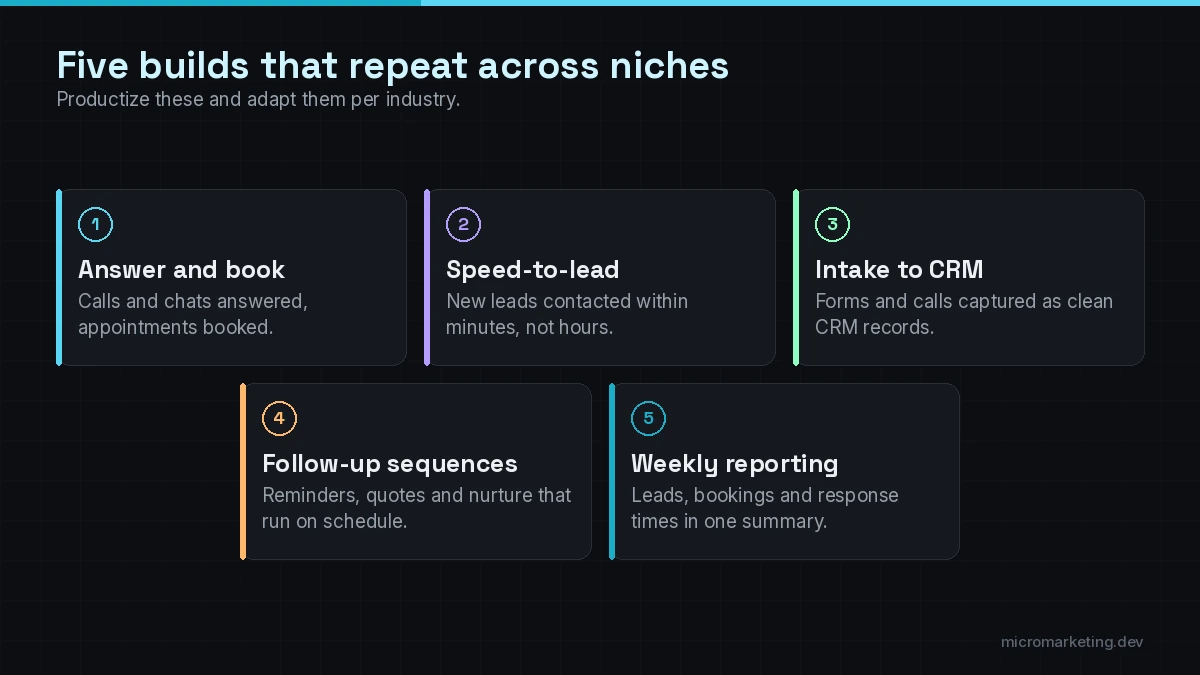
- Answer and book: an AI receptionist or AI voice agent on the phone line.
- Speed-to-lead: instant replies and routing for web, chat and ad leads.
- Intake to CRM: one capture point that creates the record, usually an n8n workflow.
- Follow-up sequences: quotes, consults, recalls and win-backs, with an AI drafting step where it helps.
- Reporting: a weekly summary that pulls numbers from every tool. Often a small AI agent.
That’s good news if you’re choosing a niche. Your core builds transfer; what changes is the scripts, the integrations and the compliance details. It’s also why we organize our AI automation services around those builds rather than around industries.
Mistakes we’d avoid when niching down
- Picking a niche for the hype, not the volume. A trendy industry with few inbound requests won’t produce automation wins.
- Ignoring compliance until the sales call. If you pick healthcare or legal, learn the basics first and build them into your offer.
- Selling “AI” instead of outcomes. Owners buy “every call answered and booked,” not “a large language model.”
- Faking social proof. Don’t invent case studies, reviews or testimonials to look established. The FTC’s Consumer Reviews and Testimonials Rule bans fake reviews and testimonials, and FTC staff say advertising agencies and reputation firms can be liable too. Also, don’t build review-request flows that only ask happy customers; the FTC Q&A says that practice could violate the FTC Act.
- Promising results you can’t measure. Agree on a baseline (calls missed, response time, hours spent) before you build.
Once you’ve picked a niche, getting known in it is a separate job. Our guide on how to grow an AI automation agency’s brand in 2026 covers that. For the task-level view of what owners want automated, see the manual tasks small businesses should automate in 2026.
Frequently asked questions
What is the most profitable niche for an AI automation agency?
There’s no single most profitable niche. The strongest niches combine high inbound volume, repeatable rules, a clear cost of slow replies and tools with APIs. Home services, dental and medical offices, law firm intake and property management often fit that pattern.
Should an AI automation agency niche down or stay general?
Niching down usually makes sales and delivery easier because your scripts, integrations and examples carry over between clients. You can keep a general core offer, like answering, booking and follow-up, and package it for one or two industries.
Are healthcare businesses a good niche for AI automation?
They can be, because they’re appointment-driven and phone-heavy. They also bring HIPAA and patient-privacy obligations, so you need compliant vendors, careful data handling and assistants that stick to logistics instead of medical advice.
What automations do small businesses ask for most?
The same few come up across industries: answering and booking calls, instant replies to new leads, getting form and call data into the CRM, follow-up sequences, and weekly reporting.
Does Micromarketing work with agencies?
Our Who We Serve page lists founders and agencies among the teams we work with, as a practical partner to turn software and marketing ideas into shipped systems. The best first step is a free strategy call or a Growth Strategy session with Tony.
Want a second opinion on your niche?
If you’re building an agency, bring your shortlist of niches. We also build custom white-label software that agencies can offer to their own clients under their brand. If you run a business in one of these industries, bring the task that eats your week. Either way, we’ll map where automation fits first. Book a free strategy call, or book a Growth Strategy session with Tony to work through the whole plan. To see what we build in each niche, browse our AI automation services.
Newsletter
Get growth playbooks in your inbox.
Practical SEO, PPC, automation, and web strategy from the Micromarketing team. No fluff, unsubscribe anytime.